Welcome to Sea Level Design!

I'm a Professional Software Engineer specializing in hardware and software integration with an emphasis on embedded systems design and development. With over 3 decades of experience in software engineering, I have a proven track record turning ideas into reliable, production-ready systems — whether that’s firmware, real-time control, device drivers, or tightly integrated hardware platforms. I specialize in integrating diverse, heterogeneous systems into cohesive, interoperable solutions within complex environments.
After many years of professional work on large-scale and mission-critical system designs, I’m now focused on freelance embedded projects and custom device solutions, from prototypes to deployment. With a strong background in software development and hardware ecosystems, I enjoy working with device-level control protocols and application programming interfaces (APIs) to develop robust commercial products.
Click on any of the links below for more information.
PROFESSIONAL EXPERIENCE

- Microsystems Analyst, Information Resources, Chicago, IL
- Software Engineering Manager, Information Resources, Chicago, IL
- Senior Systems Consultant, Tribune Information Systems, Orlando, FL
- Director, Advanced Technology, Tribune Broadcasting, Chicago, IL
- Director, Advanced Technology, Tribune Corporate, Chicago, IL
- Director, Product Development, Evision, Oakbrook, IL
- Senior Software Engineer, Marketron, Hailey, ID
- Senior Software Engineer, Wideorbit, San Francisco, CA
- Senior Director, Platform Integration, Cadent, San Jose, CA
- Embedded Systems Engineer, Independent Contractor
- Software Engineer & Owner, Sea Level Design
AREAS OF EXPERTISE
Software Engineering
Networking & Web Protocols
Software Engineering

I have over 30 years of experience in software engineering, spanning system architecture, application development, and performance optimization across diverse platforms.
Hardware Integration
Networking & Web Protocols
Software Engineering
I have over 20 years of experience integrating hardware components into cohesive, high-performance systems, including circuit design, signal integrity, power management, and high-speed interfaces.
Networking & Web Protocols
Networking & Web Protocols
I have strong expertise in designing and implementing robust solutions using core network and web protocols, including HTTP, TCP/IP, and related standards.
PROGRAMMING LANGUAGES
C / Embedded C
I’ve been using embedded C and standard C for over 30 years across Linux, Windows, and microcontroller platforms, delivering high performance and stability in a wide range of applications.
Python
Python is my preferred language for rapid development, offering excellent support for quick prototyping and a vast ecosystem of libraries maintained by a strong developer community.
Java
Java
For full-stack application development, I prefer Java and its ecosystem of tools tailored for building large-scale, database-driven services that demand low latency and high performance.
DEVELOPMENT PLATFORMS

My primary development environment is Microsoft Windows, where I leverage its robust ecosystem of tools and software for efficient coding and testing. I utilize features like PowerShell, Windows Subsystem for Linux (WSL), and integrated development environments to streamline my workflow and enhance productivity.

My secondary development environment is Raspberry Pi Linux, where I benefit from its stability, flexibility, and strong library support across a wide range of programming languages. Its rich ecosystem of open-source tools and package managers allows me to efficiently build, test, and deploy applications with ease.
Arduino makes microcontroller prototyping fast and approachable, allowing me to quickly turn ideas into working circuits using simple code and plug-and-play hardware. With widely supported boards like the Arduino Uno and rich library ecosystem, I can move from concept to prototype in minutes.

I am a registered Apple developer focused on building applications for iOS phones and tablets. I value the tightly integrated development environment Apple provides, from Xcode and Swift to integrated testing and deployment tools. This cohesive ecosystem allows me to design, develop, and distribute high-quality apps efficiently.

STM32 microcontrollers from STMicroelectronics provide a powerful, scalable platform for prototyping from simple embedded projects to production-grade systems. Using tools like STM32CubeIDE and hardware abstraction libraries, developers can quickly configure peripherals and write code without dealing directly with low-level registers, though the steeper learning curve is rewarded with high performance and a clear path from prototype to commercial deployment.
NXP microcontrollers and processors from NXP Semiconductors offer a flexible, production-ready platform for embedded prototyping, ranging from low-power MCUs to high-performance crossover processors. With tools like the IAR Embedded C IDE and a strong SDK ecosystem, I can quickly configure peripherals and build prototypes with minimal setup, while still scaling to commercial embedded products.
DEVELOPMENT SOFTWARE
Eclipse
Eclipse
Eclipse

Eclipse IDE is one of the most widely adopted development platforms by offering a free, open-source, and highly extensible environment that supports multiple programming languages through its plugin ecosystem.
Claude
Eclipse
Eclipse

Claude has significantly accelerated how I write, debug, and reason about code. By enabling natural-language interaction for complex tasks, it helped shift programming toward a more conversational, productivity-focused workflow.
ChatGPT
Eclipse
Arduino IDE

ChatGPT is an artificial intelligence assistant that I use with coding, writing, research, problem-solving, and workflow automation through natural language conversations.
Arduino IDE
IAR Embedded Workbench
Arduino IDE
The Arduino IDE is an open-source software platform used to write, compile, and upload code to Arduino-compatible microcontrollers.
IAR Embedded Workbench
IAR Embedded Workbench
IAR Embedded Workbench

IAR Embedded Workbench is a professional integrated development environment (IDE) used for developing and debugging embedded applications on a wide range of microcontrollers and processors.
STM32 Cube IDE
IAR Embedded Workbench
IAR Embedded Workbench
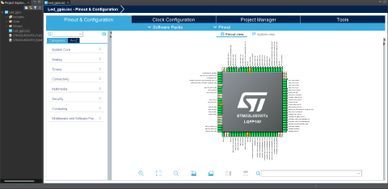
STM32CubeIDE is an all-in-one development environment from STMicroelectronics designed for developing, configuring, and debugging applications for STM32 microcontrollers and processors.
DEVELOPMENT HARDWARE
Raspberry Pi Computers
Breadboards & Components
Raspberry Pi Computers
These are fully functional, single-board computers ready to power everything from creative projects to full-fledged systems with displays and peripherals. Running Linux, they are backed by a massive open-source ecosystem and an energetic global community.
Arduino Dev Kits
Breadboards & Components
Raspberry Pi Computers
These are 32-bit ESP32 microcontrollers featuring built-in Wi-Fi and Bluetooth, along with a 12×8 LED matrix. They’re super easy to work with and are backed by a wide range of open-source libraries from the online community.
Breadboards & Components
Breadboards & Components
Breadboards & Components
Breadboards and other electrical components are essential to circuit design because they allow me to quickly build, test, and modify circuits without permanent soldering.
Multimeters
Digital Logic Analyzers
Breadboards & Components
An essential instrument in any embedded systems lab for analyzing signal behavior and verifying input levels. It enables precise measurement, efficient troubleshooting, and a deeper understanding of circuit performance.
DC Power Supplies
Digital Logic Analyzers
Digital Logic Analyzers
DC power supplies are essential to circuit design because they provide a stable and adjustable source of voltage and current needed to power and test circuits reliably.
Digital Logic Analyzers
Digital Logic Analyzers
Digital Logic Analyzers
DC digital analyzers are essential to circuit design because they allow engineers to measure and interpret digital signals, such as logic levels and timing relationships, within a circuit.
COMMUNICATION PROTOCOLS
HTTP / HTTPS / TCPIP
SNMP
Modbus
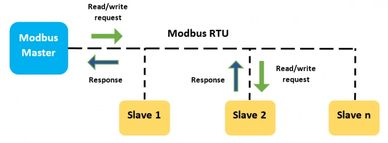
CAN bus
RS-485 Serial
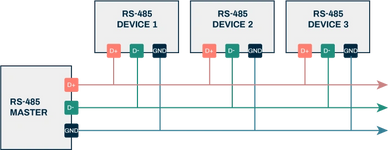
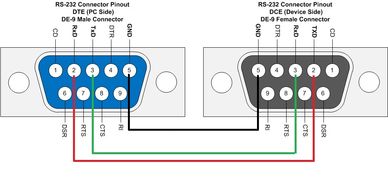
RS-232 Serial